Septic Repair vs. Replacement: How Do You Know What Your System Needs?
When something goes wrong with your septic system, it's easy to assume the worst. A sewage backup, unpleasant odor in the yard, slow drains, or an unusually wet area around your septic system can immediately raise a much bigger question:
Does my septic system need to be replaced?
Fortunately, not every septic problem means you need an entirely new system. Many issues can be traced to a specific component, clogged or damaged line, pump failure, maintenance issue, or other problem that may be repairable. The key is determining what is actually causing the problem before deciding how to fix it.
At John Kline Septic Services, we've been helping homeowners throughout Lancaster County and Central Pennsylvania diagnose and solve septic and sewer problems for generations. Depending on what we find, the right solution could be as straightforward as pumping or repairing a component—or it could involve sewer line repair, trenchless pipe lining, or, in some cases, a larger septic system repair or replacement.
Here's what homeowners should know.
First: Not Every Septic Problem Means the System Has Failed
A septic system has multiple components working together to collect, treat, and disperse wastewater from your home. When something goes wrong, the symptoms you notice don't necessarily tell you where the problem is.
For example, slow drains could be related to a full septic tank, but they could also point to a blockage in a line. Sewage odors might signal a septic problem, but an odor alone doesn't tell you whether you're dealing with a minor maintenance issue or something more significant.
Even a backup doesn't automatically mean the entire septic system needs replacement. That's why diagnosing the problem matters. Instead of jumping directly from “something is wrong” to “I need a new septic system,” the first step should be identifying which part of the system isn't functioning properly and why.

Common Signs Your Septic System Needs Attention
Septic and sewer problems rarely improve on their own. If you've noticed a change in how your plumbing or septic system is behaving, it's worth having it evaluated.
Some common warning signs include:
- Slow drains throughout the home
- Toilets that are slow to flush
- Gurgling sounds from drains or plumbing fixtures
- Sewage backing up into the home
- Persistent sewage odors indoors or outdoors
- Standing water or unusually wet ground near the septic system
- Unusually lush or green grass over part of the drainfield
- Septic alarms
- Problems with a septic pump
- Recurring clogs or backups
- A septic tank that requires unusually frequent pumping
Some of these problems may have relatively straightforward solutions. Others can indicate a more serious issue.
What matters is identifying the source.
What Septic Problems Can Be Repaired?
A septic system doesn't necessarily function as an all-or-nothing unit. Individual components can develop problems even when other parts of the system remain functional. Depending on the type and condition of the system, repairs may involve components such as pumps, risers, piping, connections, or other damaged or malfunctioning parts.
Sewer and drain lines can also develop problems that affect the way wastewater travels from the home to the septic tank. In other words, what feels like a “septic system problem” inside your house may actually be a line problem rather than a tank or drainfield problem.
That distinction can make an enormous difference in determining the appropriate repair.
Is It Your Septic System—or Your Sewer Line?
This is one of the most important questions to answer when diagnosing a backup or recurring drainage problem. The sewer line carries wastewater away from your home and toward your septic system. If that line becomes clogged, damaged, cracked, invaded by roots, or otherwise compromised, you may experience many of the same symptoms associated with a septic problem. These can include slow drains, backups, gurgling fixtures, and unpleasant odors. Simply pumping the septic tank won't repair a damaged sewer line.
Likewise, replacing a sewer line won't solve a problem originating elsewhere in the septic system. Before recommending a solution, it makes sense to determine where the failure is actually occurring.
How Sewer Camera Inspections Help Find the Problem
Sometimes the best way to understand what's happening underground is to actually look. A sewer camera inspection allows a trained technician to visually inspect the inside of a sewer or drain line. This can help identify problems such as obstructions, buildup, damaged sections of pipe, or root intrusion.
Camera inspections are particularly valuable when a homeowner is experiencing recurring problems. If a line has been opened before but continues backing up, for example, simply clearing it again may not answer the more important question: Why does this keep happening? A camera inspection can provide valuable information about the condition of the line and help determine the appropriate next step.
What About Tree Roots in Sewer Lines?
Tree roots can create significant problems for underground sewer lines. Roots naturally seek moisture. If a pipe has a vulnerable joint, crack, or other opening, roots may enter the line and continue growing inside it. Over time, that intrusion can restrict wastewater flow and contribute to recurring clogs or backups.
The presence of tree roots doesn't automatically tell us what repair will be necessary. The extent and location of the intrusion—and the condition of the pipe itself—matter. That's another situation where inspecting the line before choosing a repair method can be valuable.
Can a Damaged Sewer Line Be Repaired Without Digging Up the Yard?
Sometimes. Traditional sewer line replacement can require excavation to reach and replace damaged piping. But depending on the location, material, and condition of the existing line, trenchless sewer repair may offer another option.
John Kline Septic Services offers LR3 trenchless UV pipe lining, which allows qualifying damaged pipes to be rehabilitated from inside the existing line.
Rather than excavating an entire stretch of pipe, a liner is installed within the existing pipe and cured to create a new structural lining.
For the right application, trenchless technology can reduce the amount of excavation required and help preserve landscaping, driveways, sidewalks, and other surfaces above the line. Not every damaged line is a candidate for trenchless repair, which is another reason proper diagnosis comes first.
When Might a Septic System Need to Be Replaced?
There are situations where repairing one component simply isn't enough.
A system may have extensive deterioration, significant drainfield problems, structural damage, or other issues that make continued repairs impractical or unable to restore proper function.
Older systems can also present unique challenges, particularly if they no longer adequately serve the property or have experienced repeated failures.
But age alone doesn't tell the whole story.
An older septic system that has been properly maintained and continues functioning as intended is different from a system experiencing extensive or repeated failures. The decision should be based on the actual condition and performance of the system—not simply its age or one isolated symptom.
Septic Repair vs. Replacement: What's the Difference?
At a high level, the decision often comes down to the scope of the problem.
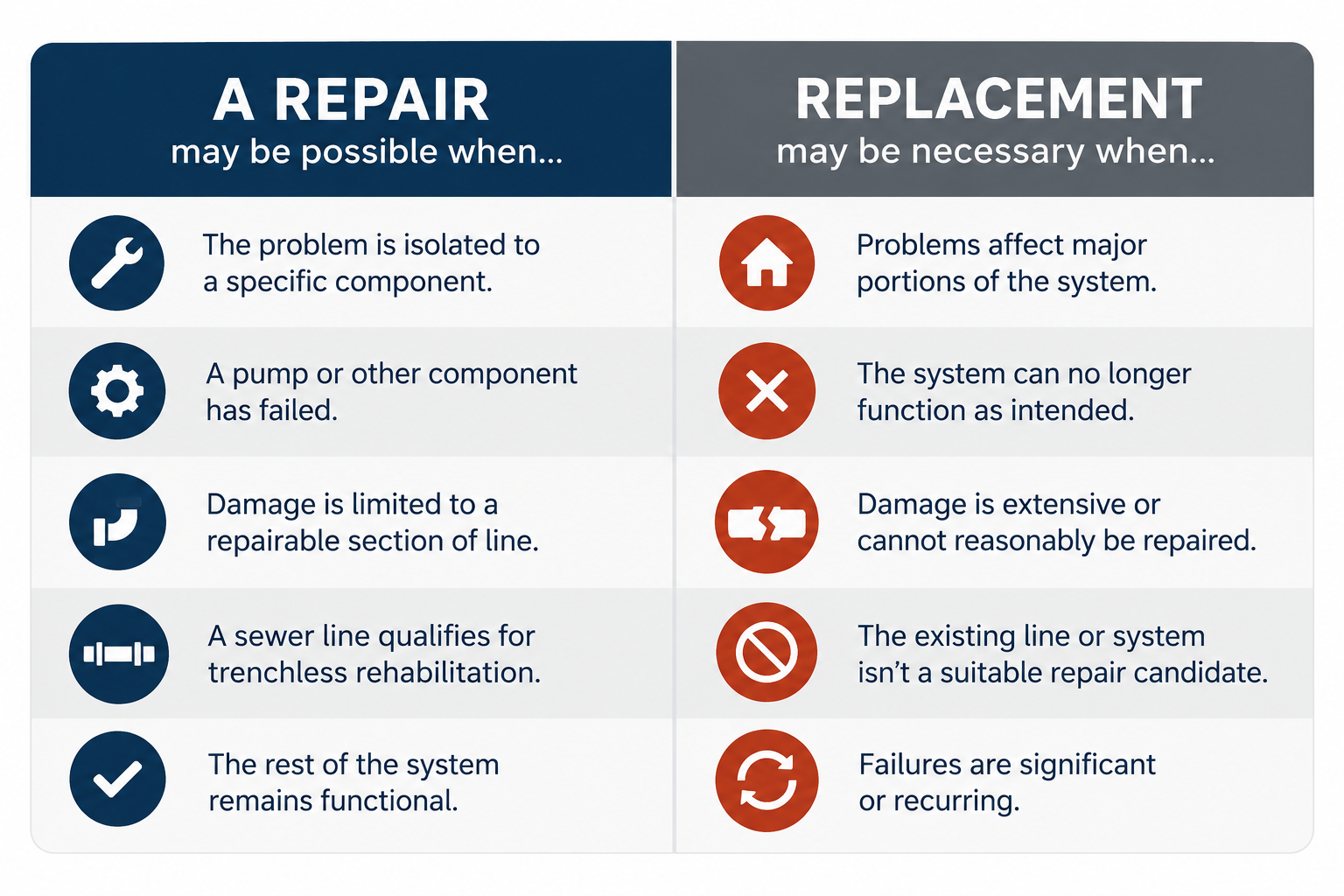
The important word here is may. A homeowner shouldn't have to diagnose this from a checklist on the internet. These signs are meant to help you recognize when it's time to have the system evaluated.
Don't Replace What Can Be Repaired—And Don't Ignore What Needs to Be Replaced
The goal isn't automatically to choose the smallest repair or the largest project. It's to choose the right solution for the actual problem.
A temporary fix that doesn't address the cause of recurring backups isn't much of a solution. At the same time, homeowners shouldn't assume that one septic problem means their entire system needs to be replaced. An experienced septic and sewer professional can evaluate what's happening, determine where the problem originates, and explain the available options. That might mean septic pumping, line opening, hot water jetting, a camera inspection, pump or component repair, trenchless sewer repair, or more extensive septic work.
Septic & Sewer Line Repairs in Lancaster County, PA
John Kline Septic Services has served Lancaster County families and businesses since 1955, providing septic and sewer services backed by four generations of experience. Today, our team combines that experience with modern diagnostic and repair technology to help homeowners solve problems as efficiently as possible.
If you're experiencing sewage backups, slow drains, septic odors, recurring line problems, or other signs that something isn't working properly, don't assume the worst—and don't wait for the problem to become an emergency. Start by finding out what's actually wrong.
FAQs: Septic Repair vs. Replacement
Can a failing septic system be repaired?
Some septic problems can be repaired without replacing the entire system. The appropriate solution depends on which component has failed, the extent of the problem, and the overall condition of the system.
How do I know if my septic tank or sewer line is causing a backup?
The symptoms can overlap, so professional evaluation may be necessary. Sewer camera inspections and other diagnostic methods can help determine whether the problem is located within a sewer line or elsewhere in the septic system.
Does a sewage smell mean my septic system is failing?
Not necessarily. Sewage odors are a reason to investigate, but several septic, sewer, or plumbing issues can produce unpleasant smells.
Can tree roots damage a sewer line?
Yes. Roots can enter vulnerable areas of underground piping and contribute to blockages and pipe damage.
Do you have to dig up a yard to repair a sewer line?
Not always. Some damaged sewer lines may qualify for trenchless pipe lining, which can rehabilitate the existing line with substantially less excavation than traditional replacement.
How often should a septic system be inspected?
Inspection needs vary depending on the system, property, age, usage, and circumstances. If you're experiencing recurring problems or signs of a malfunction, don't wait for a routine schedule to have the issue evaluated.
Share this post!
You might also find these helpful!